
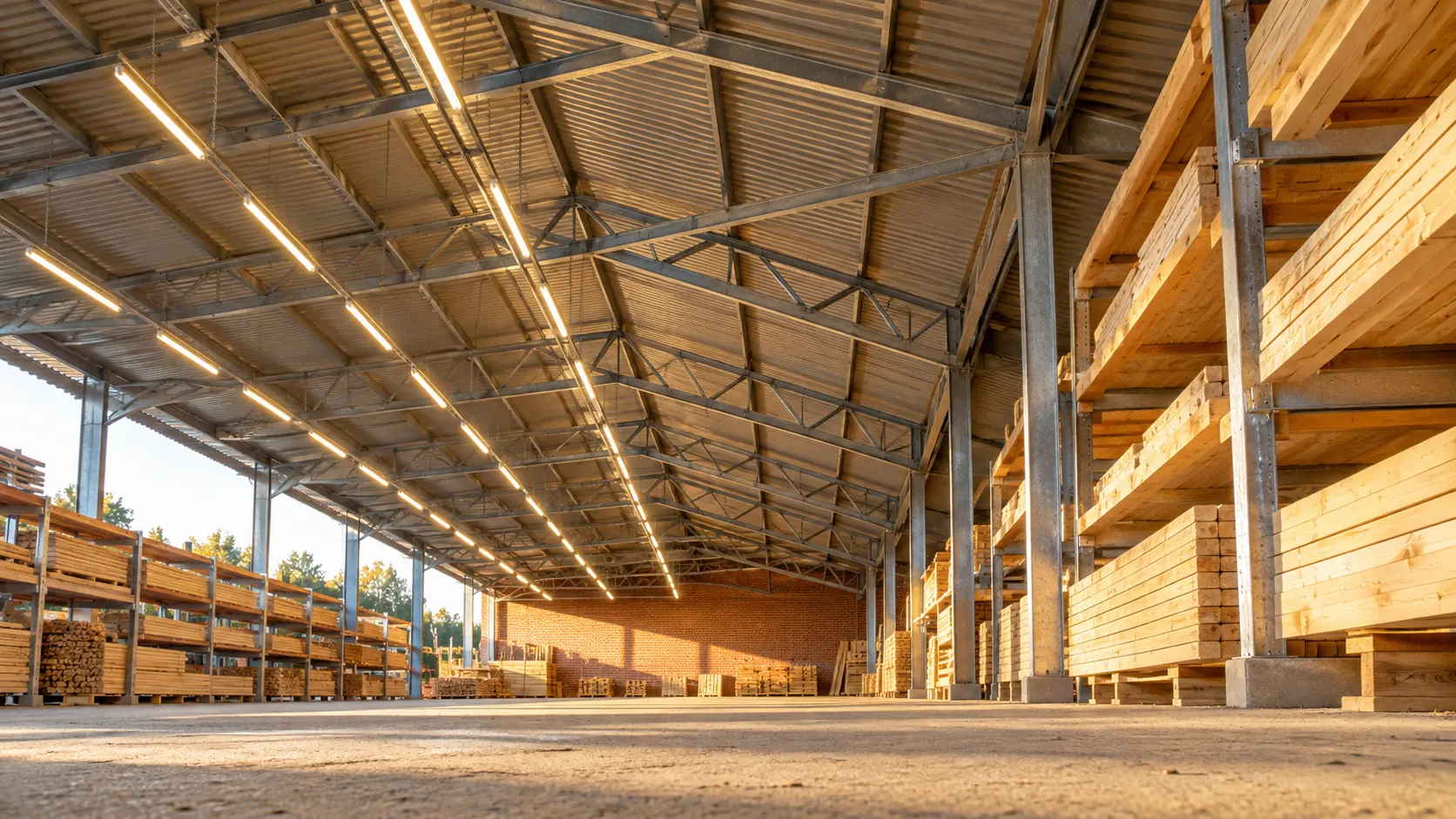
Commercial and Industrial Lighting Costs
LED High Bays, Linear Luminaires and Smart Lighting Controls
Get a Free Quote From Us Today!
We aim to get back to you in 24 hours.
Investing in commercial and industrial lighting can improve workplace visibility, support safer working conditions and help businesses manage their electricity bills. Whether you operate a warehouse, manufacturing plant, office or retail premises, the right lighting system should match the activities taking place inside your building.
The cost of a commercial or industrial lighting installation depends on the products selected, the number of fittings required and the complexity of the project.
A standard commercial or industrial LED lighting installation can cost approximately £100–£250 per fitting, including supply and installation. More specialised fittings, high-level installations and systems with advanced lighting controls may require a larger budget.
Commercial Industrial Lighting provides tailored lighting solutions throughout the UK, including LED lighting installations, high bay lights, linear luminaires and smart lighting controls. Each project is designed around the building’s dimensions, lighting requirements and operational needs.
Get a Free No Obligation Quotation Today
Average Commercial and Industrial Lighting Costs
Most commercial and industrial lighting projects are priced according to the quantity and specification of fittings, alongside the installation work involved.
The following figures provide an initial budgeting guide for typical LED lighting installations.
| Project size | Estimated installation cost |
|---|---|
| 10 LED fittings | £1,000–£2,500 |
| 20 LED fittings | £2,000–£5,000 |
| 30 LED fittings | £3,000–£7,500 |
| 50 LED fittings | £5,000–£12,500 |
| 100 LED fittings | £10,000–£25,000 |
Premium luminaires, specialist high bay products, electrical alterations, access equipment and additional controls can increase the final cost. VAT may also be additional.
For example, a commercial building requiring 30 LED fittings could have an estimated installation budget of £3,000–£7,500. A larger industrial facility requiring 100 fittings could need an investment of £10,000–£25,000.
These figures provide a starting point rather than a substitute for a project quotation. A site assessment and photometric analysis can help determine the appropriate fitting quantities, light output and positioning.
What Determines the Cost of Commercial and Industrial Lighting?
Several factors influence the overall cost of a lighting installation. Understanding these considerations can help you plan your expenditure and choose suitable products.
Type of Lighting Fixtures
The type of luminaire selected has a direct impact on the equipment budget. Different commercial and industrial environments require different lighting specifications.
Common options include:
- LED High Bay Lights: Designed for warehouses and manufacturing facilities with high ceilings, providing powerful illumination across large spaces.
- Linear Luminaires: Suitable for production lines, corridors and commercial interiors where consistent light distribution is required.
- Commercial LED Fittings: Used in offices, retail premises and other commercial environments, with options for glare control and different colour temperatures.
- Industrial Lighting Systems: Designed for demanding conditions, with robust construction and IP65 or higher protection where required.
Specialist products, custom specifications and advanced optical designs generally cost more than standard fittings.
Number of Fittings Required
The total number of lights needed will influence the equipment and labour costs.
A large warehouse may require dozens or hundreds of fittings, whereas a smaller commercial unit may need considerably fewer.
However, simply increasing the number of lights does not always produce better results. Photometric analysis can help identify the correct quantity and arrangement to achieve suitable illumination without unnecessary expenditure.
Building Dimensions and Ceiling Height
The size and structure of your premises are important when calculating installation costs.
Buildings with high ceilings may require higher-output luminaires and specialist access equipment. Wide industrial spaces may also need carefully planned beam angles to ensure even light distribution.
Obstructions such as machinery, shelving, structural beams and suspended equipment can make installation more complicated.
Energy Efficiency and Lighting Performance
Energy-efficient products can have different purchase prices depending on their technology, output and construction.
Important specifications include wattage, lumen output, luminous efficacy and expected operating life.
Commercial Industrial Lighting highlights the potential for LED technology to reduce lighting energy consumption by up to 60% in suitable applications. Actual savings depend on the existing system, operating hours and replacement specification.
Choosing efficient fittings may increase the initial investment but can help reduce electricity and maintenance expenses over time.
Installation Complexity and Electrical Work
Replacing existing fittings is generally less complicated than installing a completely new lighting system.
If existing wiring and mounting points are suitable, installation may require less labour. New electrical circuits, additional cabling, changes to distribution equipment or modifications to existing infrastructure can increase the project cost.
Installations in occupied buildings may also require phased work or out-of-hours scheduling to minimise disruption.
Smart Lighting Controls
Additional control technology can influence the final quotation.
Options include:
- Motion and occupancy sensors.
- Dimmable lighting systems.
- Daylight harvesting controls.
- Automated lighting schedules.
- Zoned lighting management.
These features allow businesses to manage lighting according to occupancy, available natural light and working schedules. Although they add to the initial cost, they can help prevent unnecessary energy consumption.
Maintenance and Product Lifespan
The quality and durability of lighting products can influence long-term ownership costs.
Commercial Industrial Lighting states that its LED lighting solutions can offer lifespans exceeding 50,000 hours. Actual performance depends on product specification, operating conditions and maintenance.
Products with reliable drivers, suitable environmental protection and appropriate warranties can help reduce the frequency of replacements and repairs.
Request a free quote
How to Get Better Value from Your Lighting Installation
A cost-effective lighting system should balance the initial installation budget with ongoing performance and operating expenses.
Consider these practical steps before starting your project:
- Arrange photometric analysis: Calculate suitable light levels and fitting positions before purchasing equipment.
- Compare product specifications: Look beyond wattage and consider lumen output, efficiency and expected lifespan.
- Select suitable fittings: Choose products designed for your building’s environment and working activities.
- Consider automated controls: Sensors and dimming systems can help reduce unnecessary electricity consumption.
- Plan installation work: Coordinating access, equipment and working hours can reduce labour expenses and operational disruption.
A properly specified lighting system can help your business avoid unnecessary costs while maintaining appropriate illumination.
Frequently Asked Questions
Is industrial lighting more expensive than commercial lighting?
Industrial lighting can cost more because it may require higher-output fittings, robust construction, specialist environmental protection and high-level installation equipment. Commercial lighting requirements are often different, particularly in offices and retail environments.
How much does it cost to upgrade an existing lighting system to LED?
The cost depends on how many existing fittings need replacing and whether the current electrical infrastructure can be reused. A straightforward replacement is generally less expensive than a complete redesign involving new circuits and lighting controls.
Can LED lighting reduce business electricity bills?
Yes. LED technology can reduce electricity consumption compared with older lighting systems. The savings depend on the existing fittings, operating hours, electricity tariff and the efficiency of the replacement products.
Do you provide lighting design and installation?
Yes. Commercial Industrial Lighting offers consultation, tailored lighting design, installation and quality checks. Photometric analysis and CAD simulations can help determine the most suitable lighting arrangement for your premises.
How quickly can I receive a lighting installation quotation?
The company aims to respond to enquiries within 24 hours. A consultation can typically be arranged within a few days, depending on location and availability. Following consultation, installations can often start within one to two weeks, depending on project requirements.
Request Your Free Commercial and Industrial Lighting Quote
Planning a lighting upgrade or fitting out a new commercial or industrial building? Commercial Industrial Lighting provides tailored LED lighting solutions for businesses throughout the UK.
From high bay lights and linear luminaires to complete industrial lighting systems with smart controls, our team can help you identify products and specifications suited to your premises.
We use photometric analysis and established lighting design methods to plan systems that support visibility, energy efficiency and workplace requirements.
Contact Commercial Industrial Lighting today to discuss your project and request a free, no-obligation quotation.
We aim to respond within 24 hours and can help you understand the costs, product options and installation requirements before work begins.
Visit our contact page or get in touch with our team to receive a price for your commercial or industrial lighting project.
speak with our team today
What People are Saying About Us
★★★★★
“Our warehouse needed more consistent lighting across the storage aisles and loading areas. The proposed high bay fittings gave us options suited to our ceiling height and layout, helping us plan improvements around our operational requirements.”
Charlotte Bennett
London
★★★★★
“We were reviewing the lighting on our production floor to improve visibility for daily tasks. The LED and linear lighting options helped us assess the requirements of different work areas while considering energy use and maintenance.”
Owain Griffiths
London
★★★★★
“We wanted to update the lighting across several office spaces without creating unnecessary disruption. The design recommendations considered glare, light distribution and control options, making it easier to plan the refurbishment.”
Stuart Fletcher
London
★★★★★
“Our project involved lighting for retail displays, back-of-house areas and external access points. Having different fitting types and control options available helped us consider the practical needs of each part of the premises.”
Rhodri Jenkins
London
Our Locations
We are proud to work nationally across the UK, allowing us to ensure we can provide services to you.
For a full list of counties we cover in the UK, see below.